
About
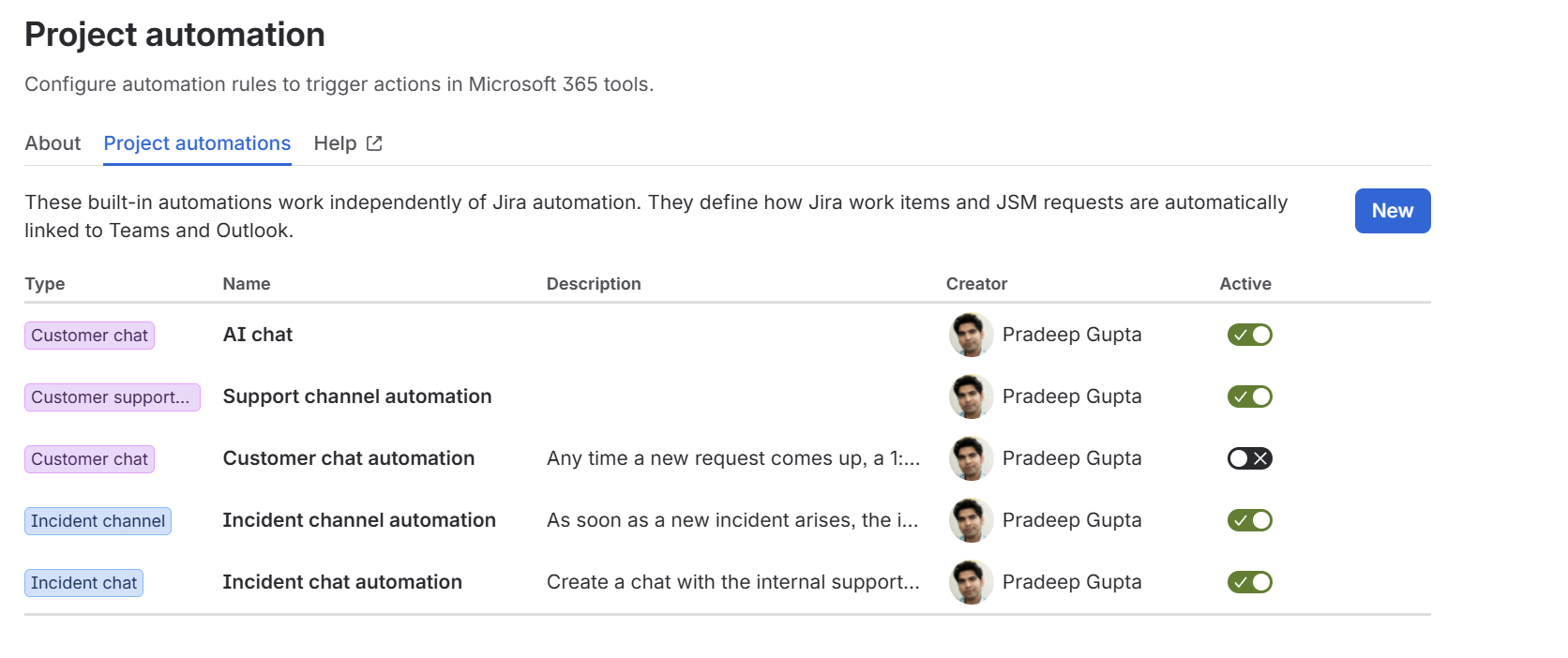
Project automations save time and streamline incident management processes in your JSM spaces.
Teams can effectively collaborate on incidents through Microsoft Teams chats, while stakeholders stay informed via dedicated Teams channel posts. They receive updates about the latest changes and overall progress.
Our project automations are simple to set up and offer multiple configuration options to fit your needs.
For Jira Service Management, there are three automation types:
Usage recommendation
Incident Channel
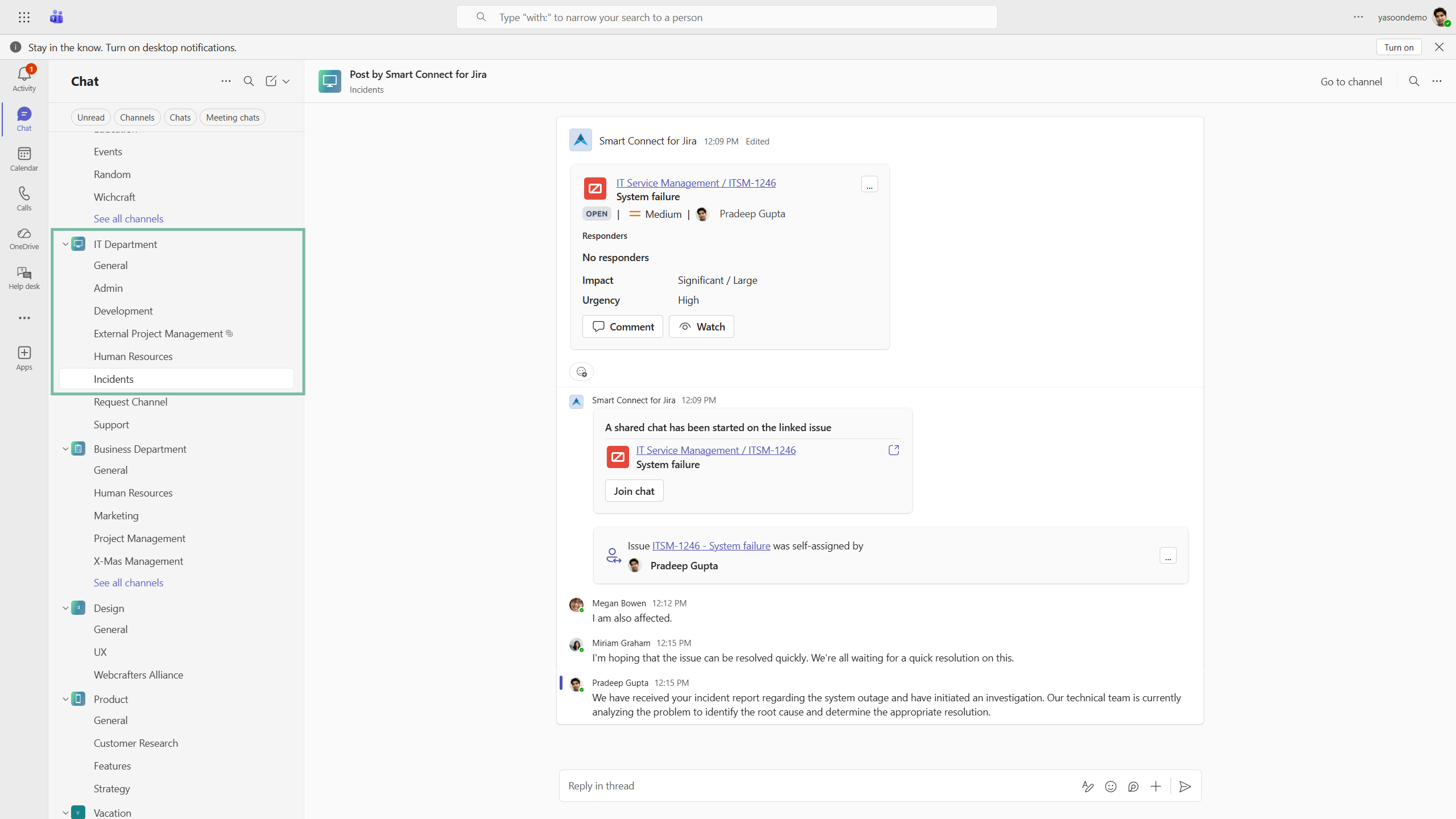
The automation will be kicked off, if a new incident is reported via the JSM portal. Details about the incident will be displayed via an adaptive card being posted into a dedicated Teams channel where stakeholders can follow up on its process and resolution.
If necessary, stakeholders and agents can jointly communicate and exchange on the incident via the channel post.
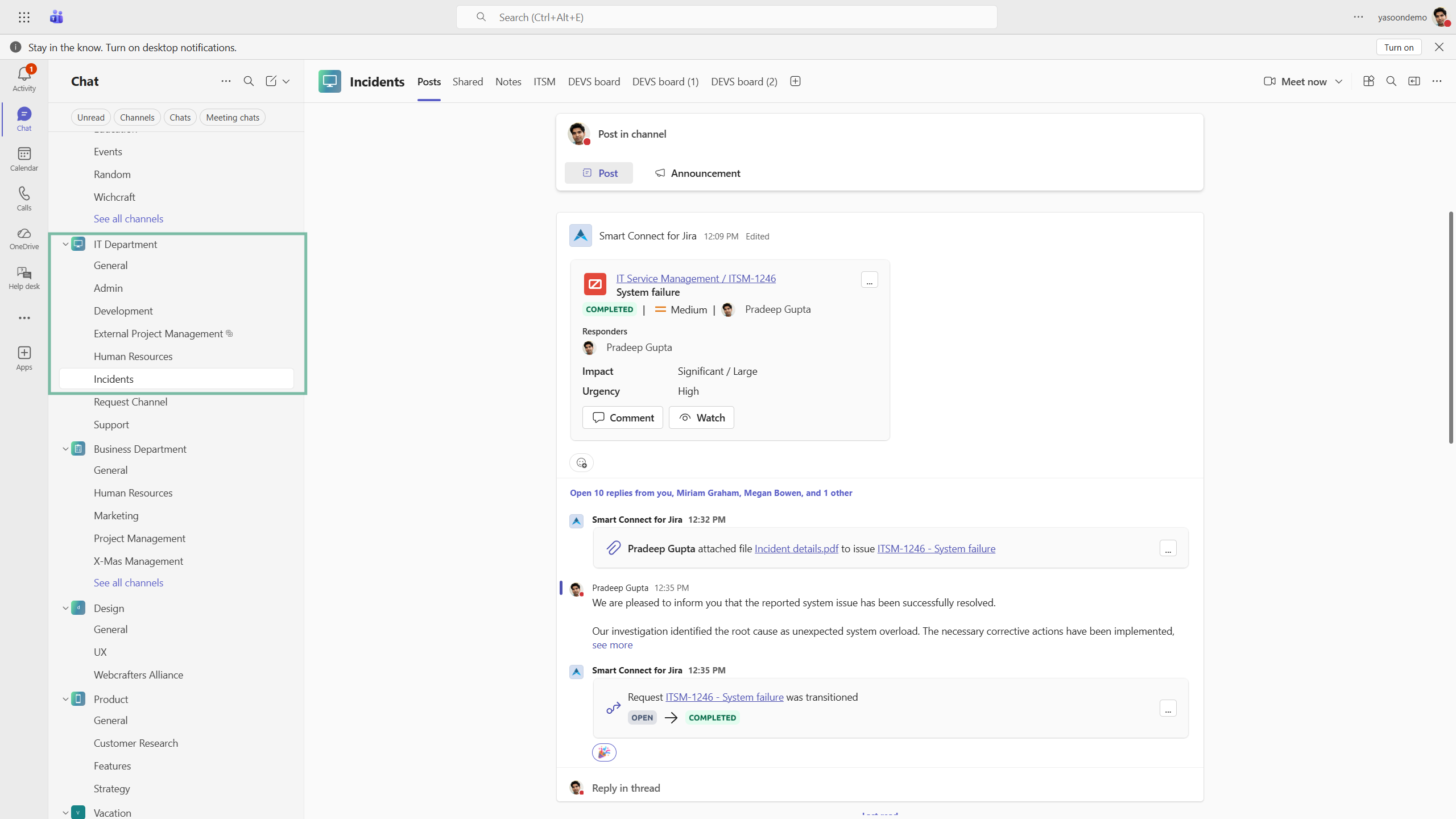
The Smart Connect app posts progress updates to the channel, such as scheduled meetings, assignee changes, or uploaded attachments.
incident chat
The automation starts, when a new incident is reported via the JSM portal and thus, initiates a Teams chat with a predefined number of participants of the support team.
The Incident Chat automation can be especially useful to triage an incident with an internal team of agents to find the most suitable solution quickly.
customer chat
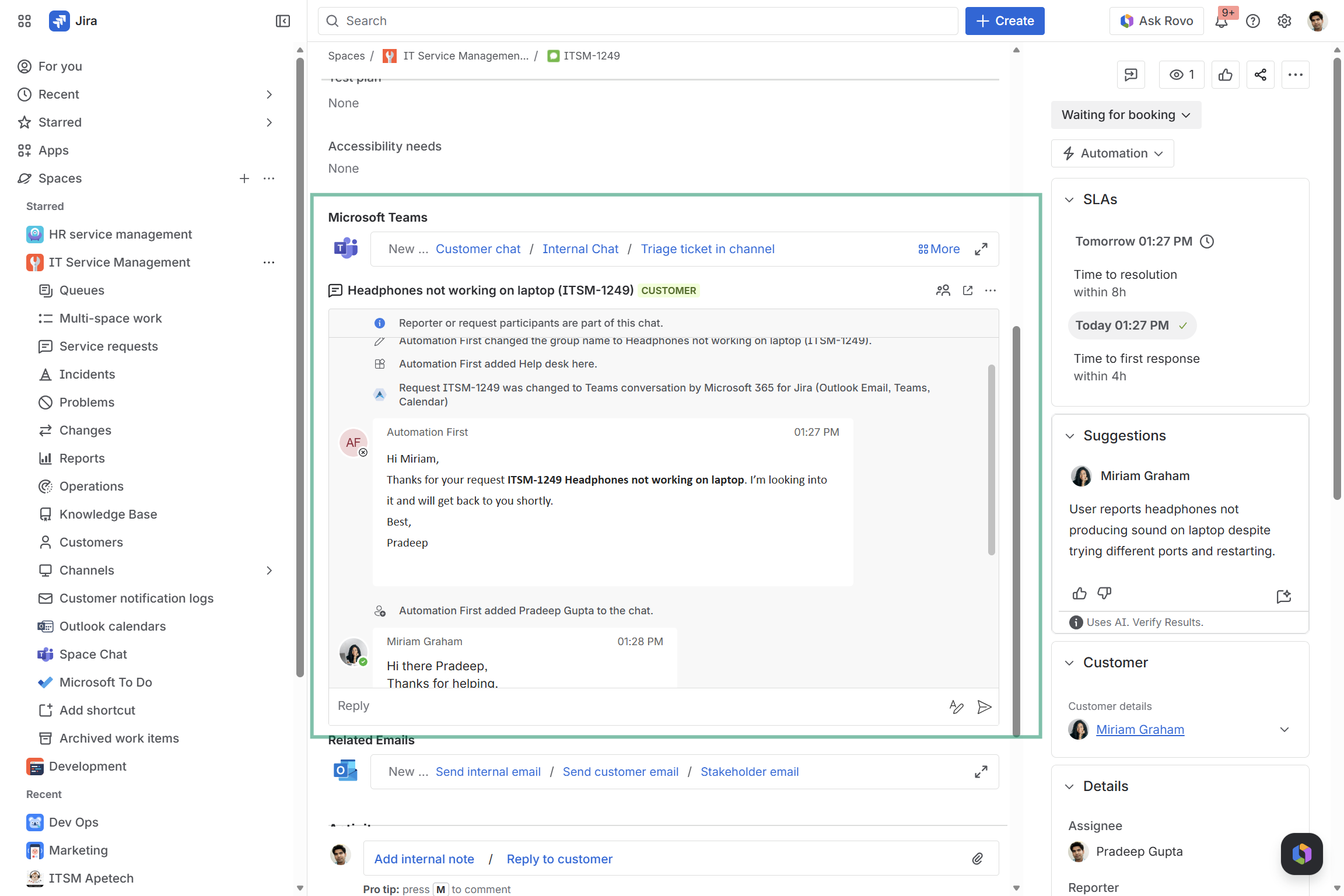
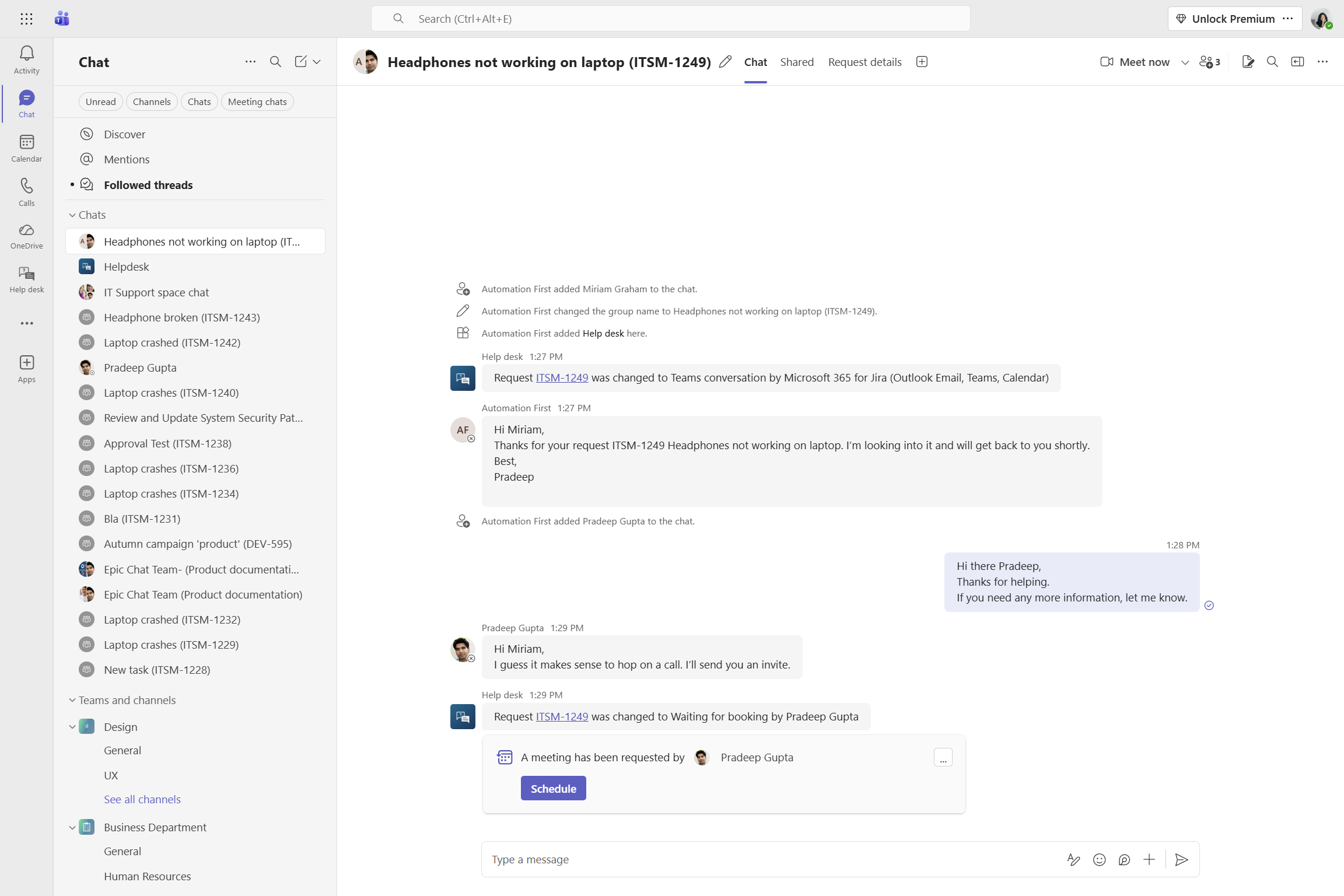
As soon as a new incident is reported, a 1:1 Microsoft Teams chat starts automatically, serving as the communication basis between customer/reporter and agent. Additional information can be shared centrally, enabling quicker resolution of the incident.
Customer chat automation is helpful, to get in direct contact with the customer / reporter of the incident.
Incident channel
When a new incident is reported, our incident channel automation posts an adaptive card to a dedicated Microsoft Teams channel.
This way, all involved stakeholders are notified about the situation, while the support team can reach out to let them know that the problem will be addressed instantly.
With the channel post, both parties can collaborate closely together and share updates on the incident or provide additional details being relevant for the support team.
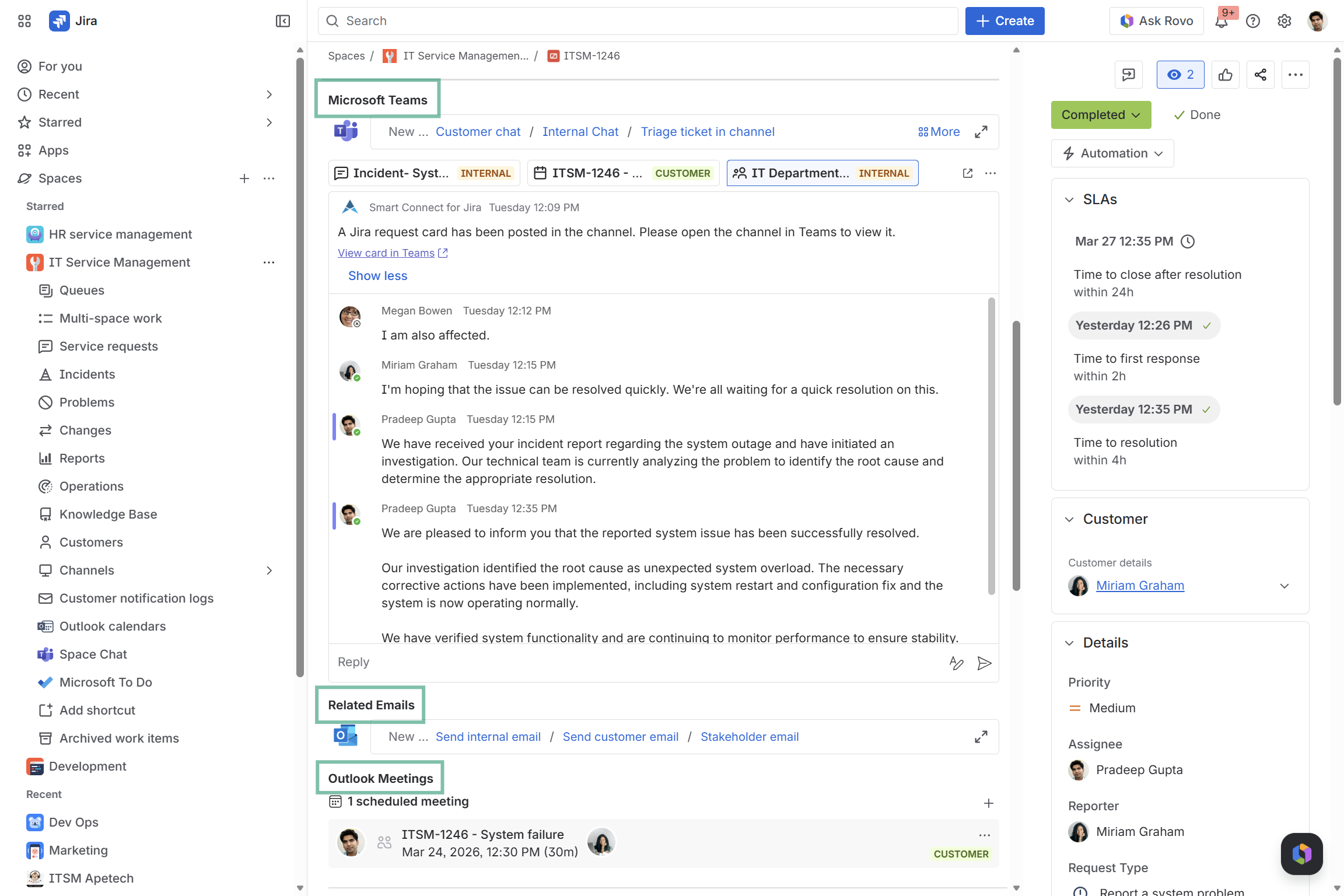
The whole conversation incl. scheduled meetings and added documents are visible and trackable in Teams and in Jira.
Configure the automation to your specific needs and align it with your projects' different purposes and your team’s overall way of working.
Configure an adaptive card
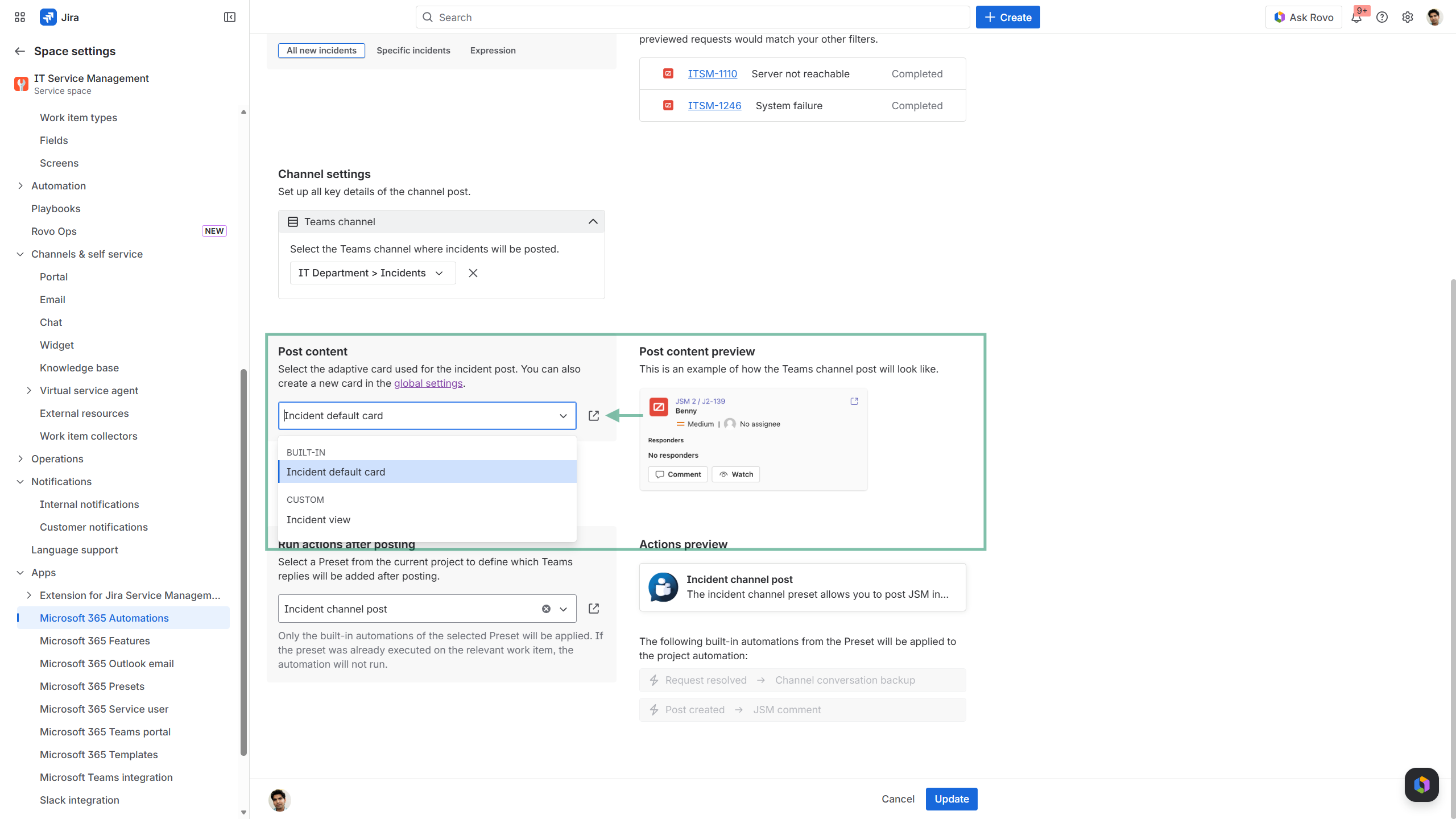
When configuring the incident channel automation, you need to select an adaptive card which is being posted into the Microsoft Teams channel.
You can select from the drop down menu.
Either select the “Incident default card” (built-in and thus, not customizable) or choose from a preconfigured “custom” one.
Customization of adaptive cards can be done in the Jira admin settings.
Click through demo
Incident chat
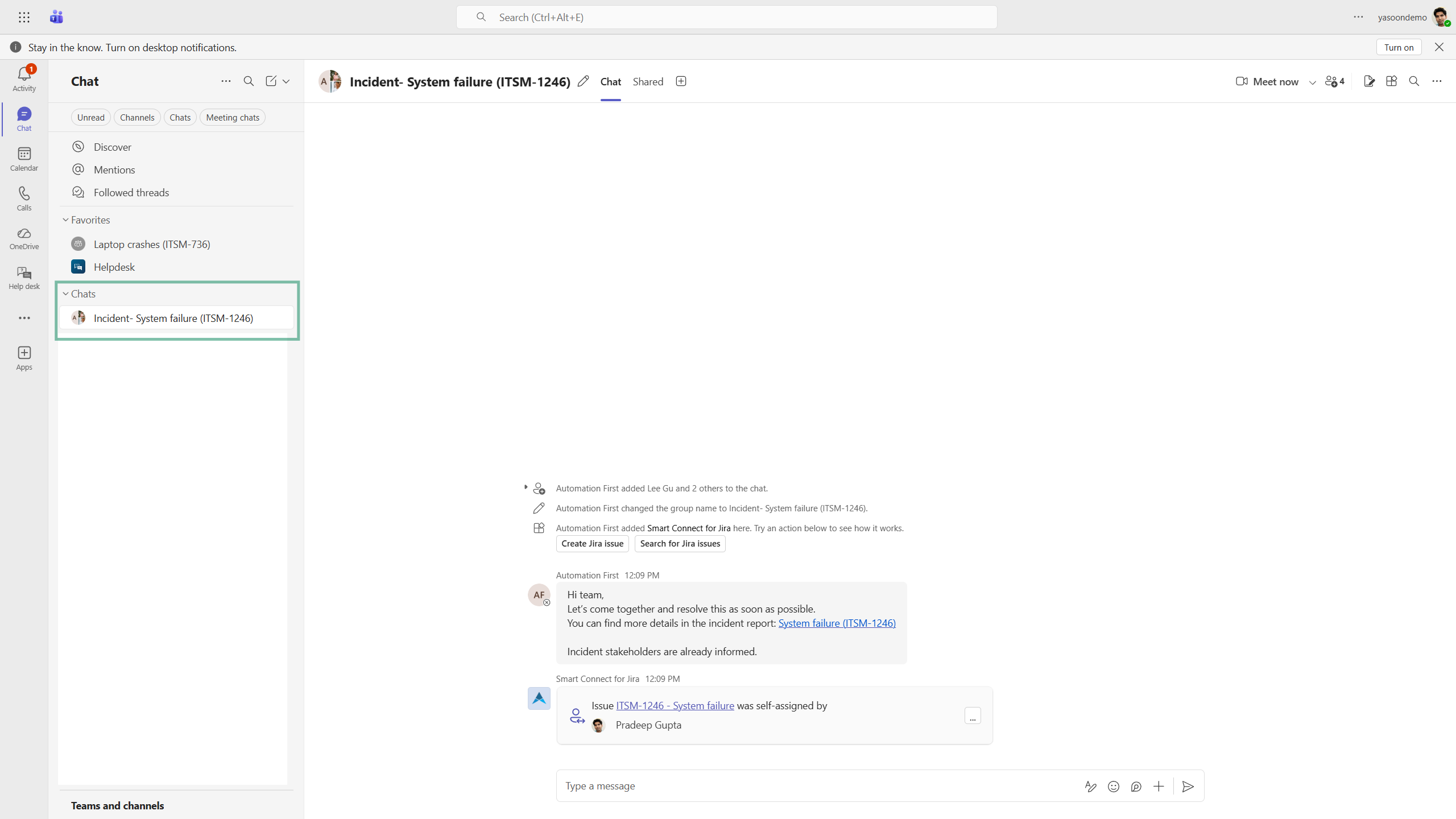
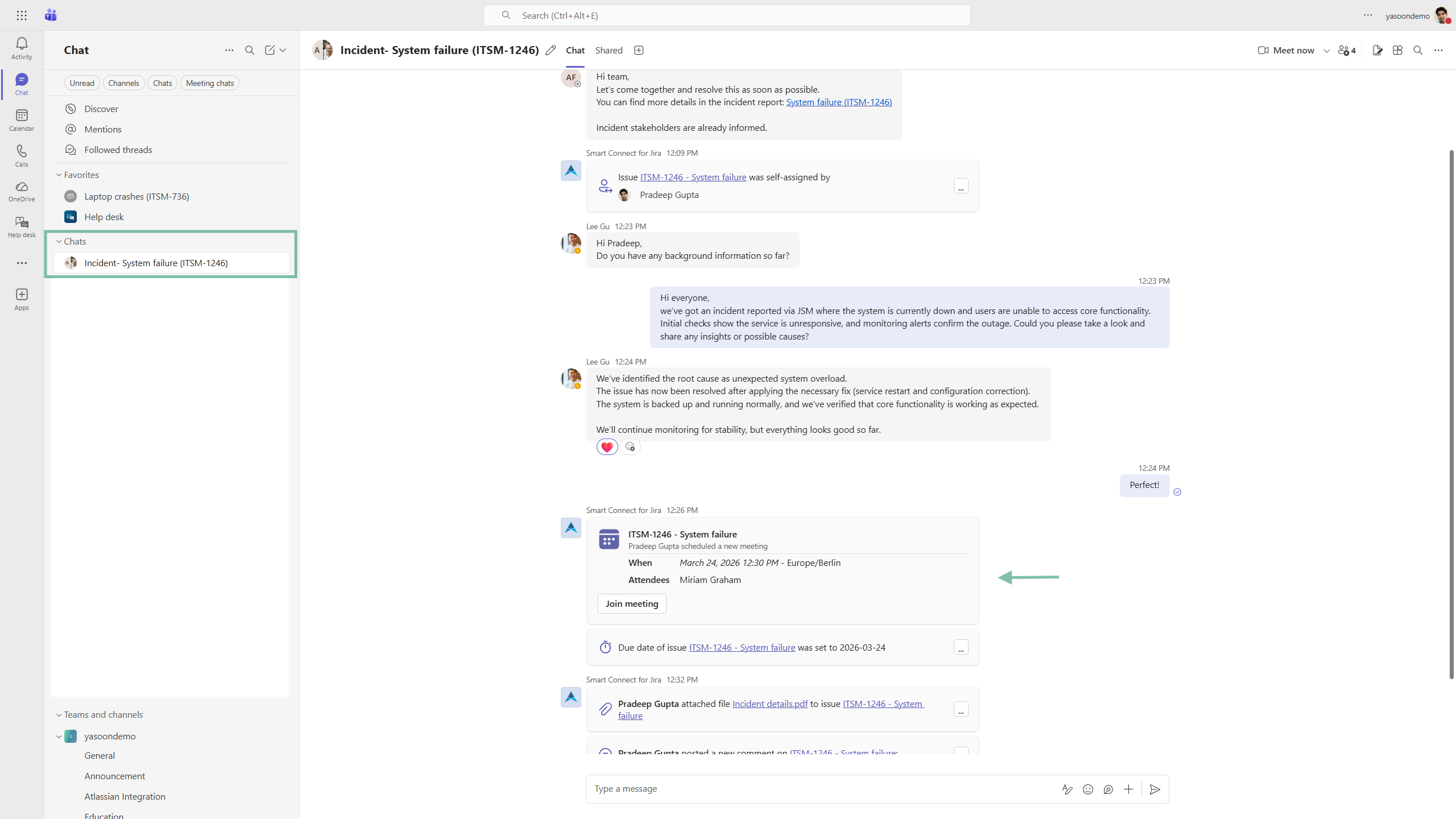
When a new incident is reported, our incident chat automation automatically starts a Teams chat with a predefined set of participants of the support team.
Use the incident chat to quickly unite as a team and exchange the best solutions to resolve the incident quickly.
Depending on the built-in automations running in the background, it can be useful, to start a Teams call right away to evaluate the situation and discuss the next steps. Those actions are defined in your chat Preset before, and can be selected when configuring the automation.
Set up the automation to your specific needs and align it with your projects' different purposes and your team’s overall way of working.
Configuring incident chats
Our incident chat automation combines several configuration options of our Microsoft 365 for Jira app. We recommend reviewing them first before jumping into the set-up itself.
In the section below we want to outline steps which require attention and preparation.
Of course, you can configure them during the set-up process of the automation via the arrow next to the individual steps.
Set-up a service user
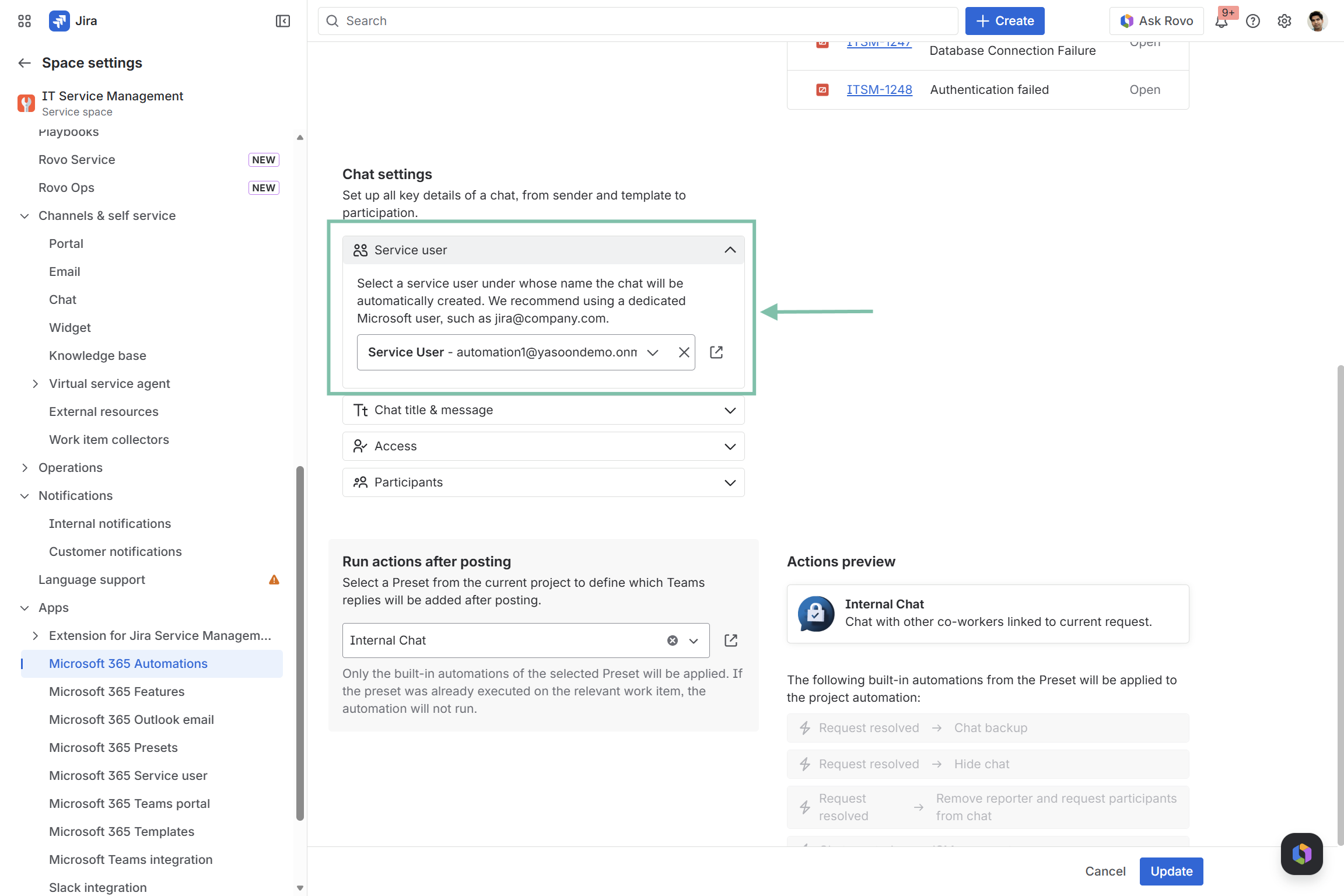
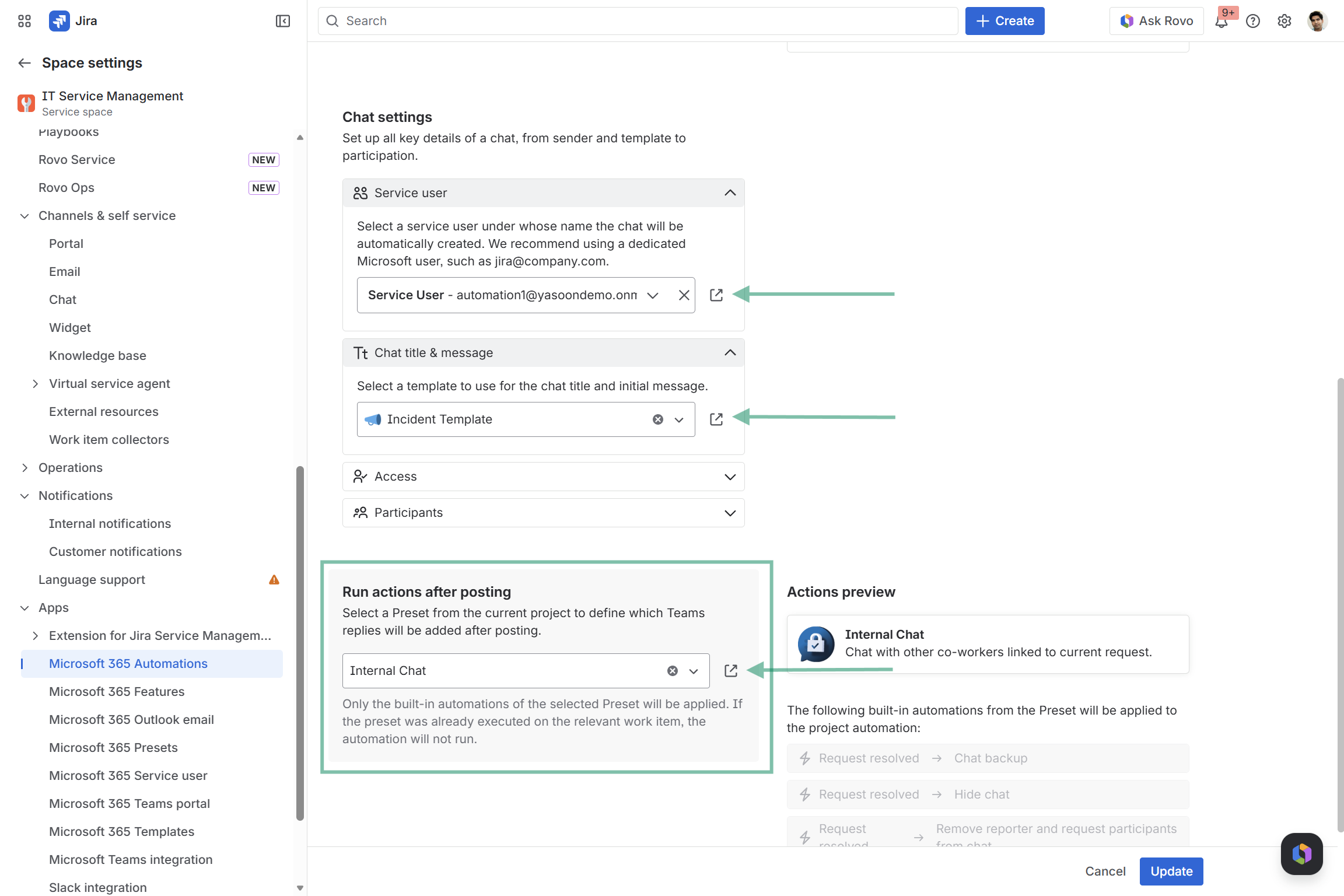
When configuring the incident chat automation you need to define a service user. It is this neutral user who initiates Teams chats on behalf of the app until an agent or team member jumps in.
Since the automation starts Teams chats automatically whenever a new incident is reported (which is not necessarily your personal task to solve), you should not use your personal credentials as the sender.
Follow the link (arrow) next to the service user tab to set them up.
Via the service user, communication can be initiated quicker and information can already be exchanged.
Please keep in mind, that the service user requires a Microsoft Teams license.
Learn more about service users.
Set-up a chat template
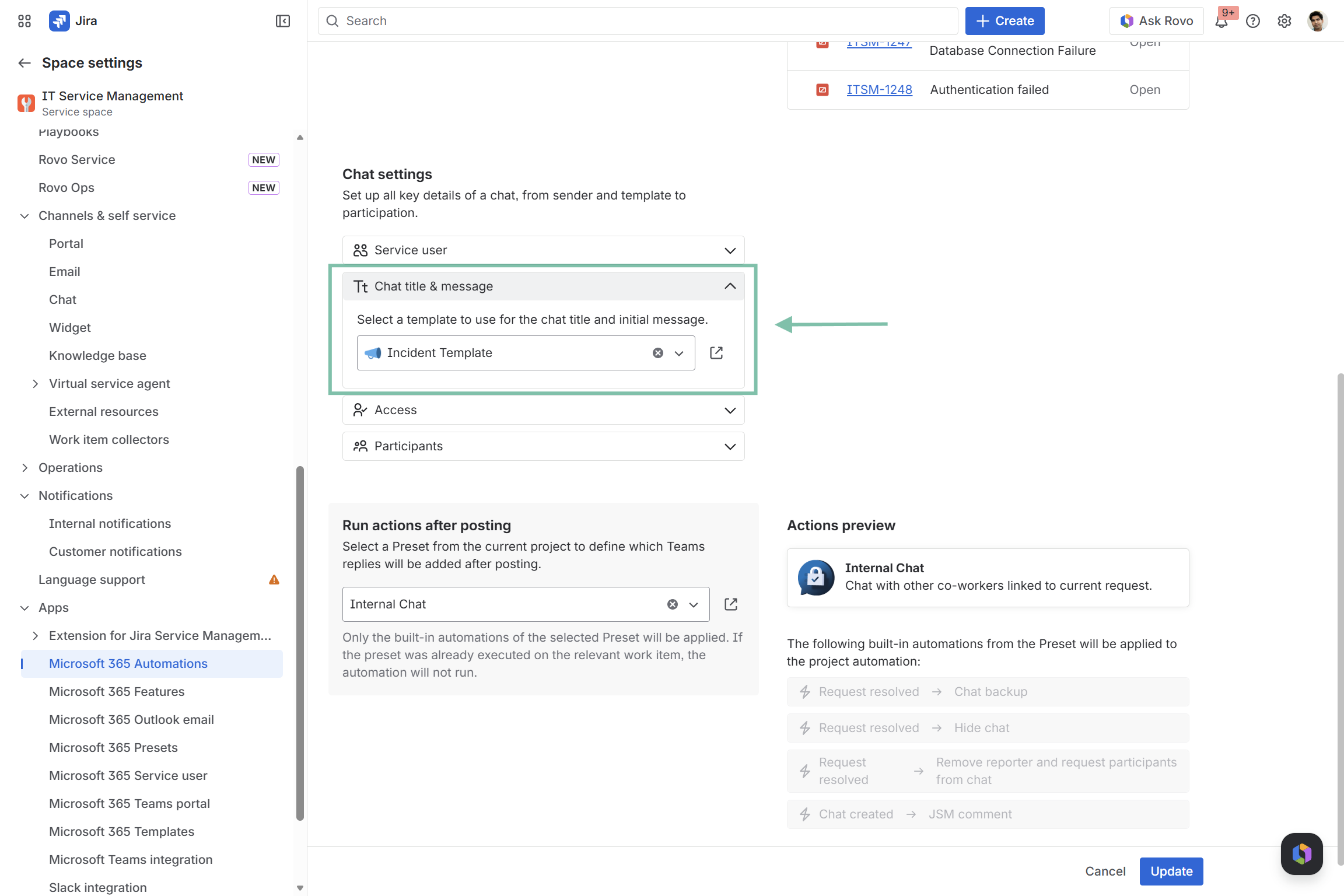
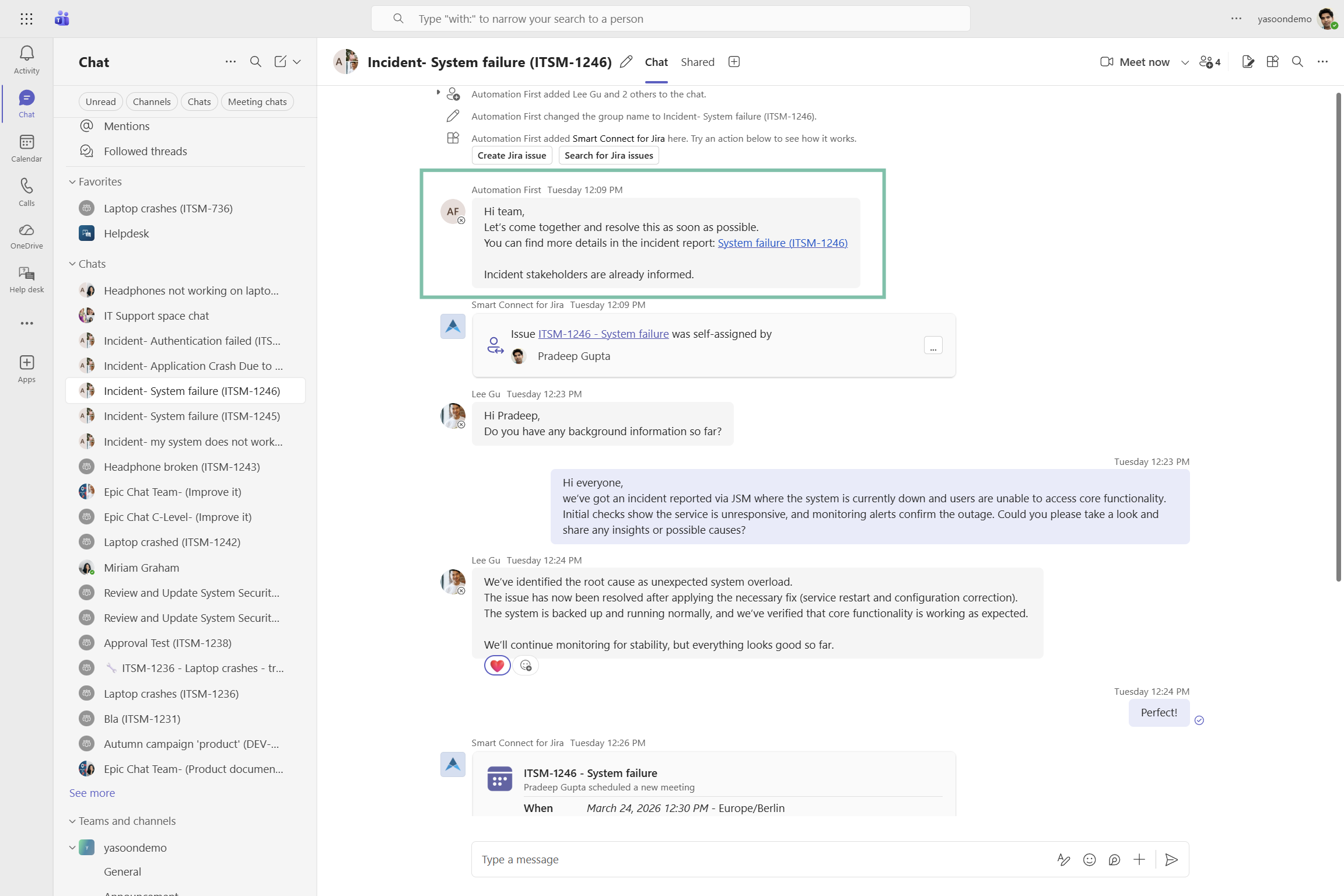
Select a suitable template as the basis for the initial chat message posted by the Service User when an incident arises.
We recommend to set-up a template before configuring the automation. To do so, go to your space settings. Alternatively, you can do so when clicking on the arrow.
If there is already a template at hand, conveniently select it via the drop down menu.
Make sure, that the message aligns with the purpose of the chat and may already contain overall information / next steps for the team.
Set-up a Teams chat Preset
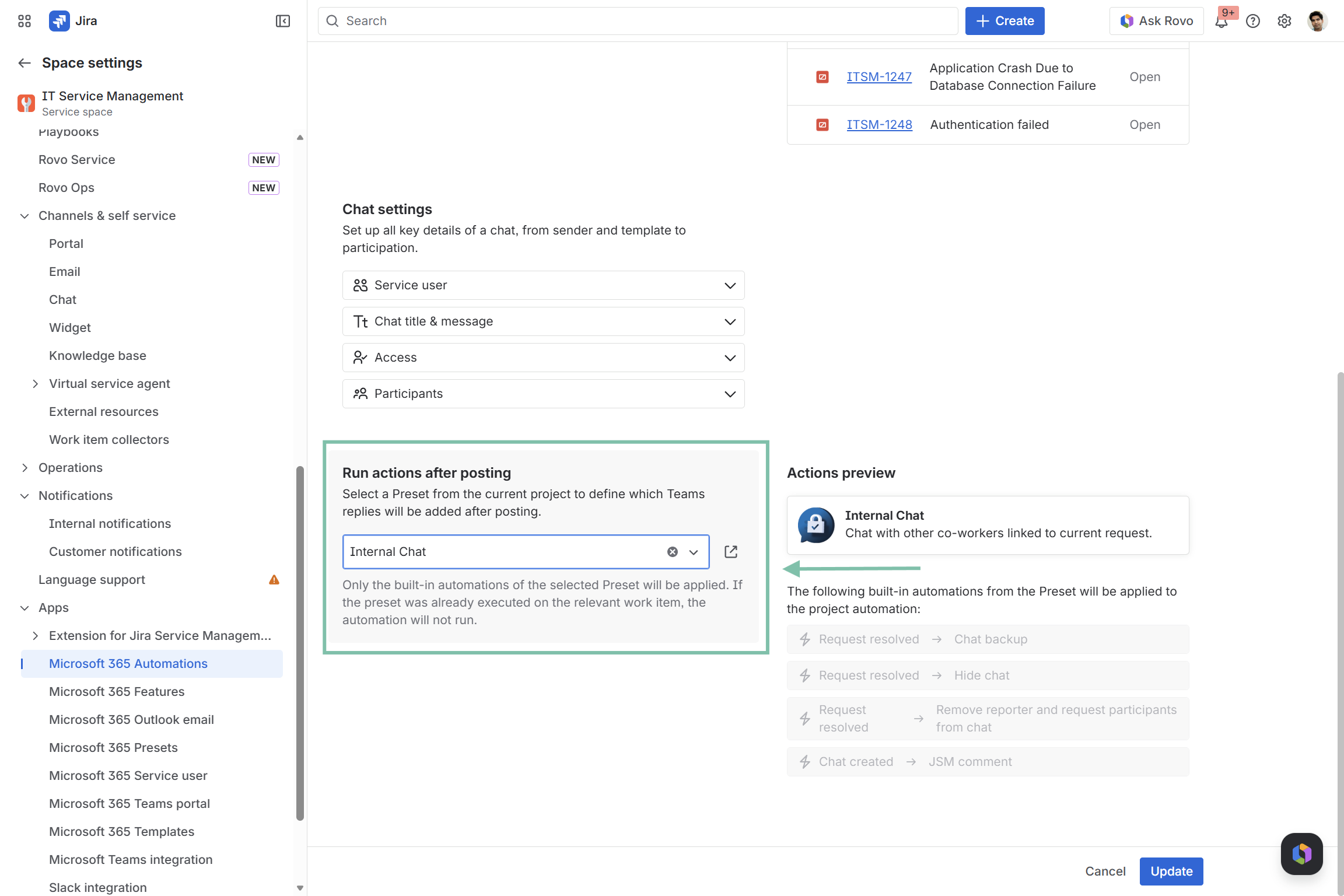
Chat behavior and subsequent actions after posting the chat to Teams, depend solely on the preconfigured Preset (keyword: built-in automation).
It is the Preset that will kick off actions like adding a JSM comment to the work item after the chat has been started. Or that the chat will be backed up as a PDF file, if the work item is resolved, for example. Or to take up the example from before, that calls are started directly with the team after the incident was reported.
The Preset should to be configured before in the space settings. Alternatively, do so via the arrow. Make sure that the Preset has a clear and distinct name to find it easily in the drop down menu.
Configure a Teams chat Preset.
Customer chat
As soon as an new incident is reported either via the JSM portal in Jira or via the portal in Teams, the service user will start a 1:1 chat with the customer right away.
The customer feels serviced and the agent can jump in quickly to find suitable solutions in time.
Chatting 1:1 on specific topics makes it easier to make progress and the customer feels “seen” and happy, if they know that their issues is taken seriously.
Please take into account, that the configuration of customer chats, require the same steps (service user, chat template, chat Preset) just like the automation “Incident Chat”.
Use our global automation rules to configure specifics more detailed like request type, status, or priority.
Support Channel
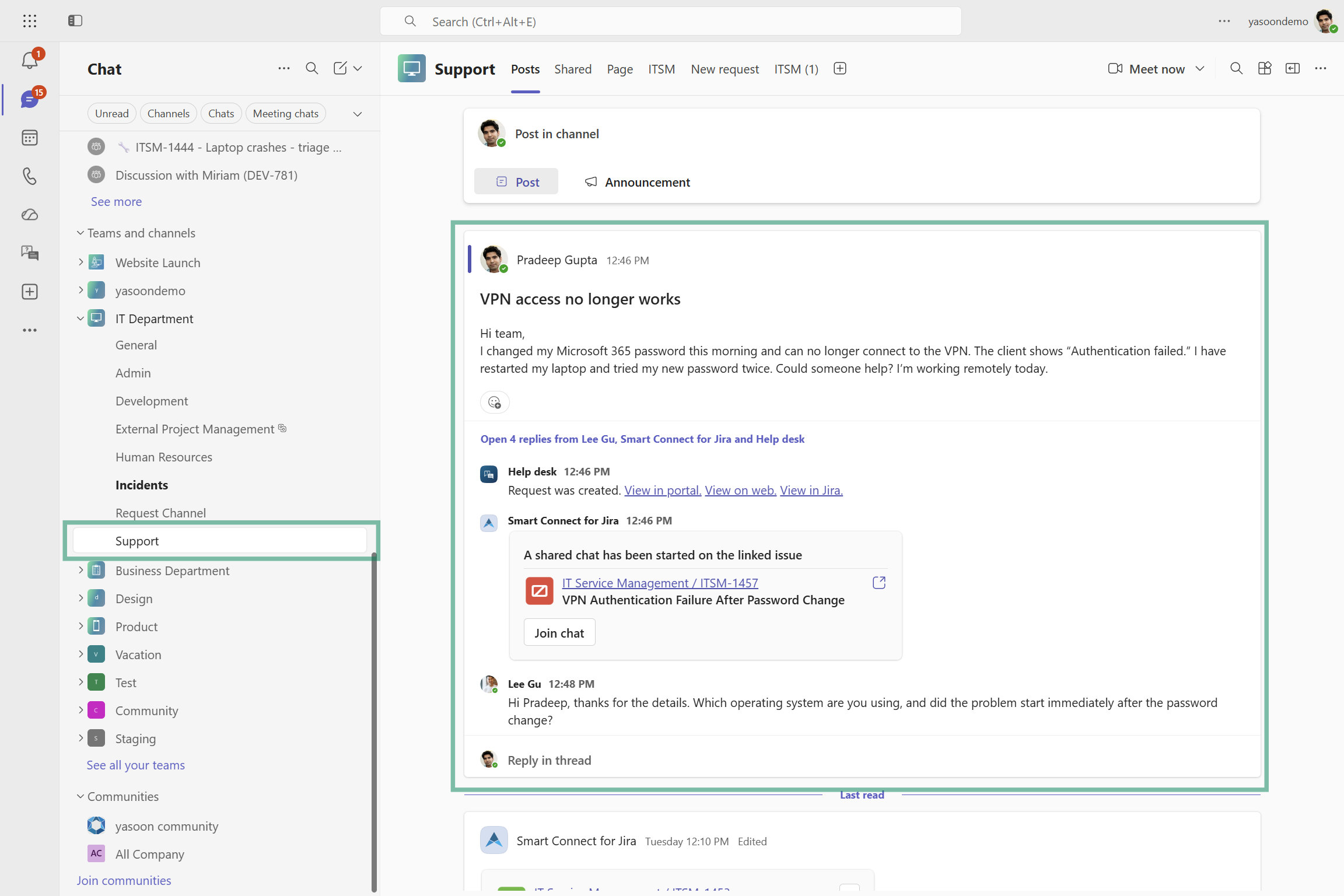
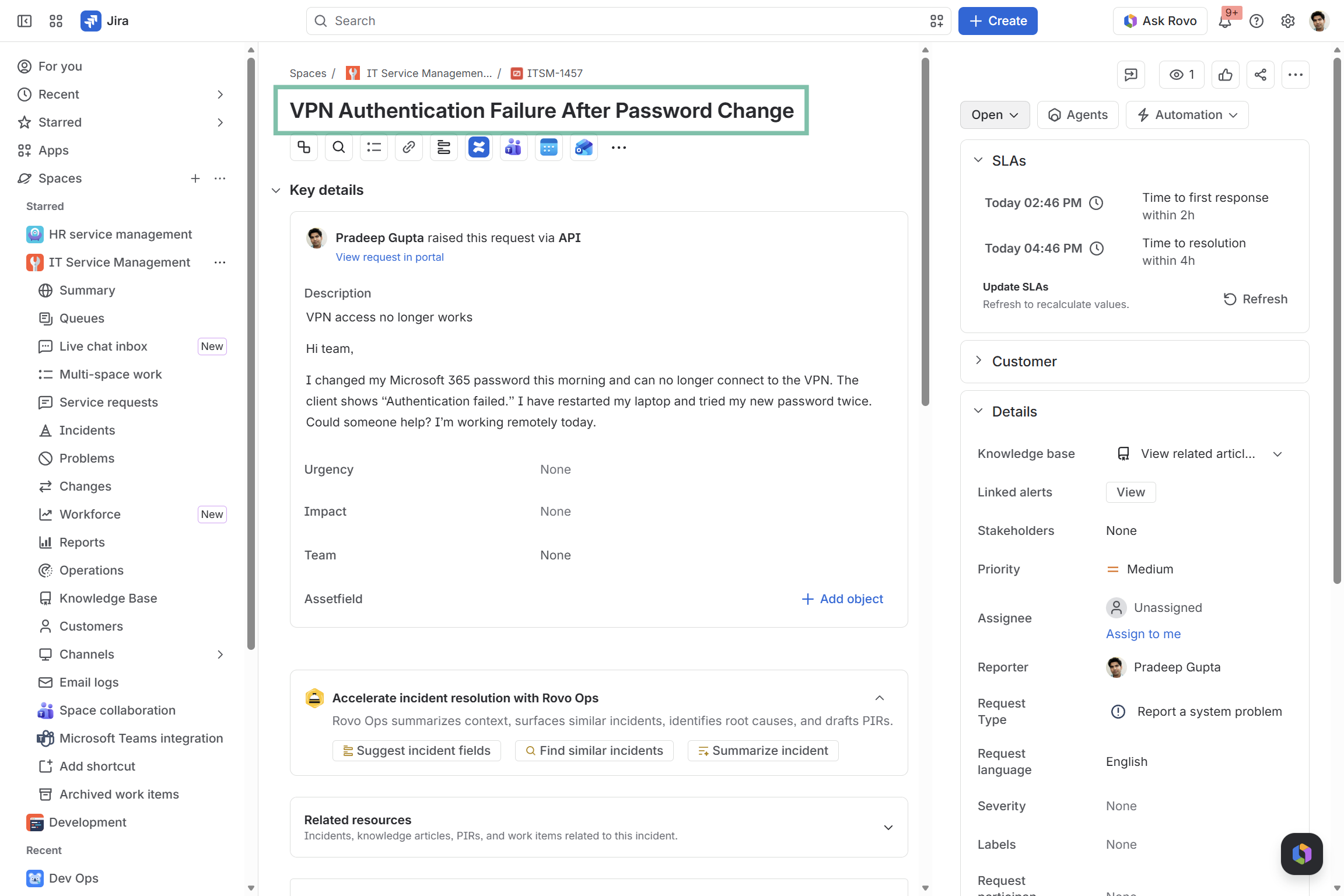
Turn Microsoft Teams channel conversations into Jira Service Management requests and keep the original thread linked to the request.
Use the Support Channel automation when employees or customers regularly submit support requests in a Microsoft Teams channel. Choose whether every new top-level post creates a request or only conversations that receive a reply with a defined keyword. The Teams conversation will be automatically linked to the new request.
Customers can continue the conversation in Microsoft Teams while the support team manages and resolves the linked request in Jira Service Management.
Configure the automation to match the purpose of your project and the way your team works.
Automation configuration
The configuration of all automation types mentioned here, are basically the same.
The only difference is that Incident Channels require an adaptive card layout to post relevant information optimally in the dedicated Teams channel.
For Incident Chats you need to set-up/choose a service user. Please consider the above-mentioned steps to take into consideration before.
The set-up of all automation types, needs to be done via a Jira project admin.
Admin configuration
The process is simple and takes just a few clicks.
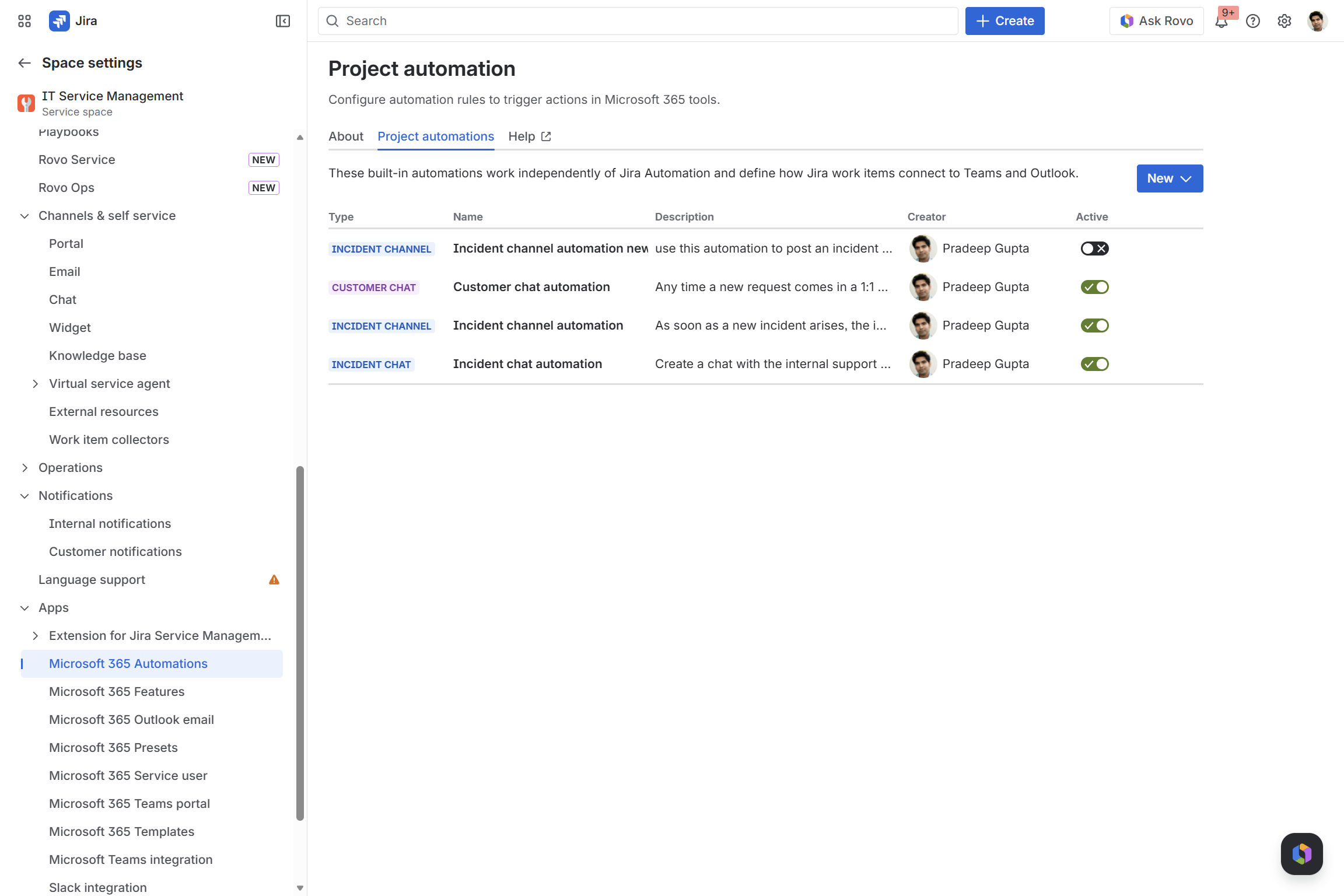
The project admin can set-up and configure project automations via the space settings.
Under “Microsoft 365 automations” → “Project automation”, the admin can access all setup steps.
Configuration guideline
Support Channel
As a Jira space administrator, define how the automation turns Microsoft Teams channel conversations into Jira Service Management requests.
Select the source channel, configure the trigger and transferred content, and determine the request type, target field, and summary. AI features must be enabled in the global Jira settings to use AI-generated content for the request description and summary.
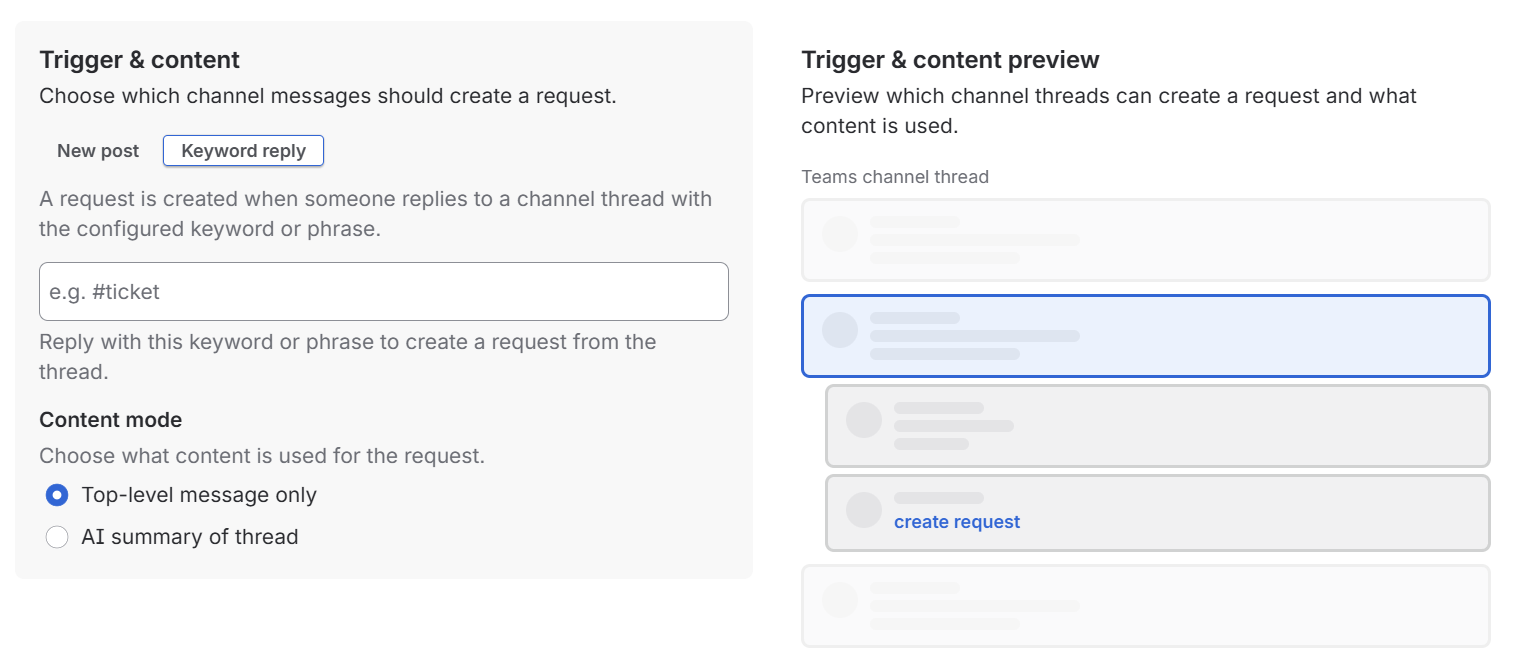
Trigger and content
Choose which messages in the selected Microsoft Teams channel should create a Jira Service Management request and what information the automation should transfer to Jira.
-
New post: Create a request whenever someone starts a new conversation in the selected channel. Use this option for channels dedicated to support requests.
-
Keyword reply: Create a request only when someone replies to a channel conversation with the configured keyword or phrase. Use this option when the channel also contains general discussions and only selected conversations should become support requests. Enter the keyword or phrase that should trigger the automation, for example,
create request.
Content mode
Choose which conversation content the automation adds to the configured Jira text field.
-
Top-level message only: Add the original channel post without its replies. Use this option when the initial post already contains a complete and structured support request.
-
AI summary of thread: Summarize the top-level message and its replies. Use this option when troubleshooting details, questions, or possible solutions emerge during the conversation.
Request settings
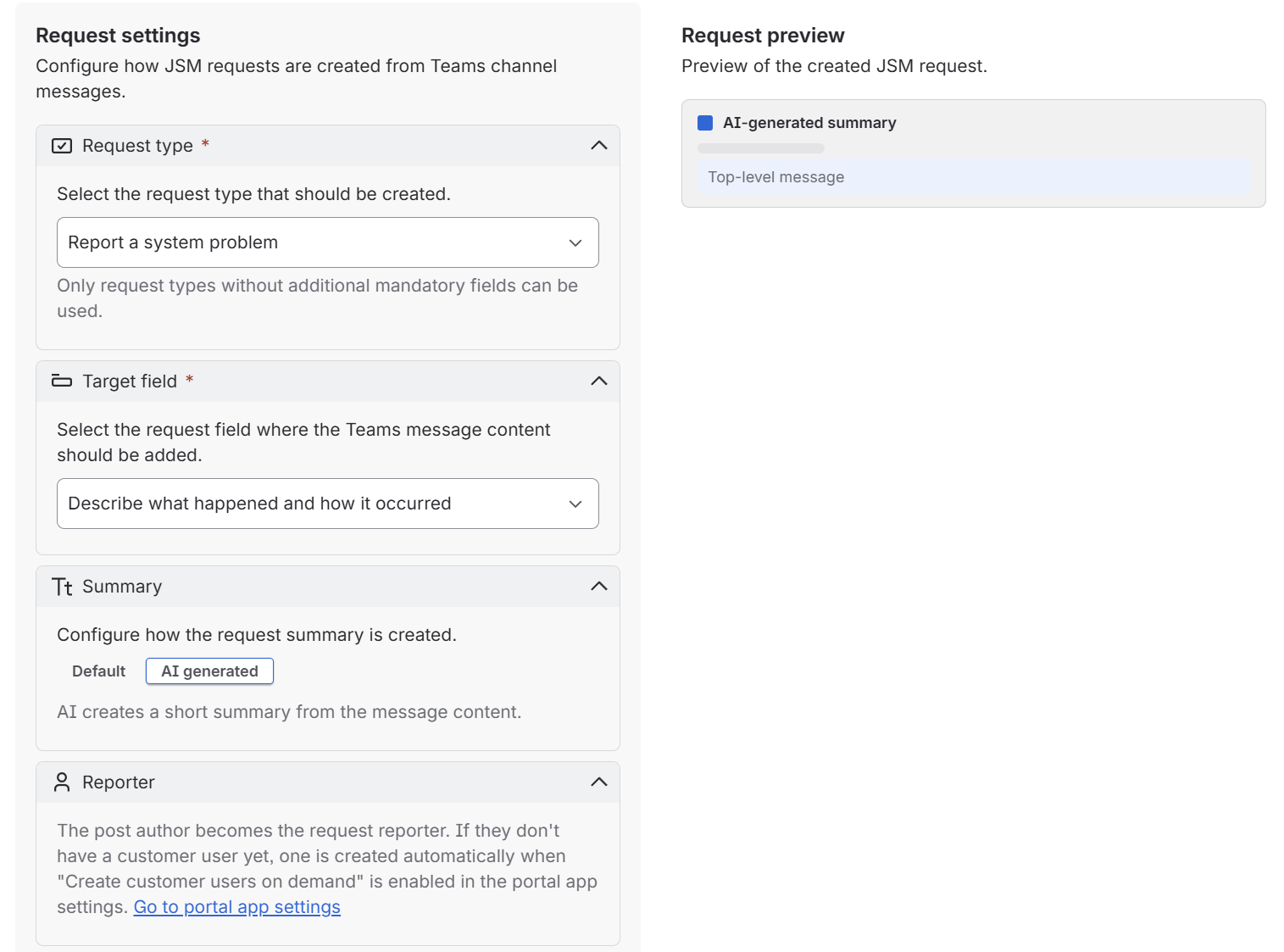
Configure how the Support Channel automation creates Jira Service Management requests from Microsoft Teams conversations.
-
Request type: Select the Jira Service Management request type created by the automation, such as Get IT help or Report a system problem.
-
Target field: Select the writable text field that receives the Teams message or AI-generated summary.
-
Summary: Use the default summary, consisting of the team name, channel name, and an automatically generated number, or create an AI-generated summary based on the conversation.
-
Customer or reporter: The author of the Microsoft Teams post becomes the customer or reporter of the new request. If no Jira Service Management customer user exists for that person, Microsoft 365 for Jira creates one automatically, provided Create customer users on demand is enabled in the Customer Portal app settings. Learn more about automatically created customer users.
User configuration
This feature offers instant accessibility with no user configuration needed.
You can start right away.
Useful links
-
You require more a more extensive and detailed automation for your team? Check out our Microsoft 365 automations and configure individual actions and triggers globally: https://support.yasoon.com/M365FJ/automation-features